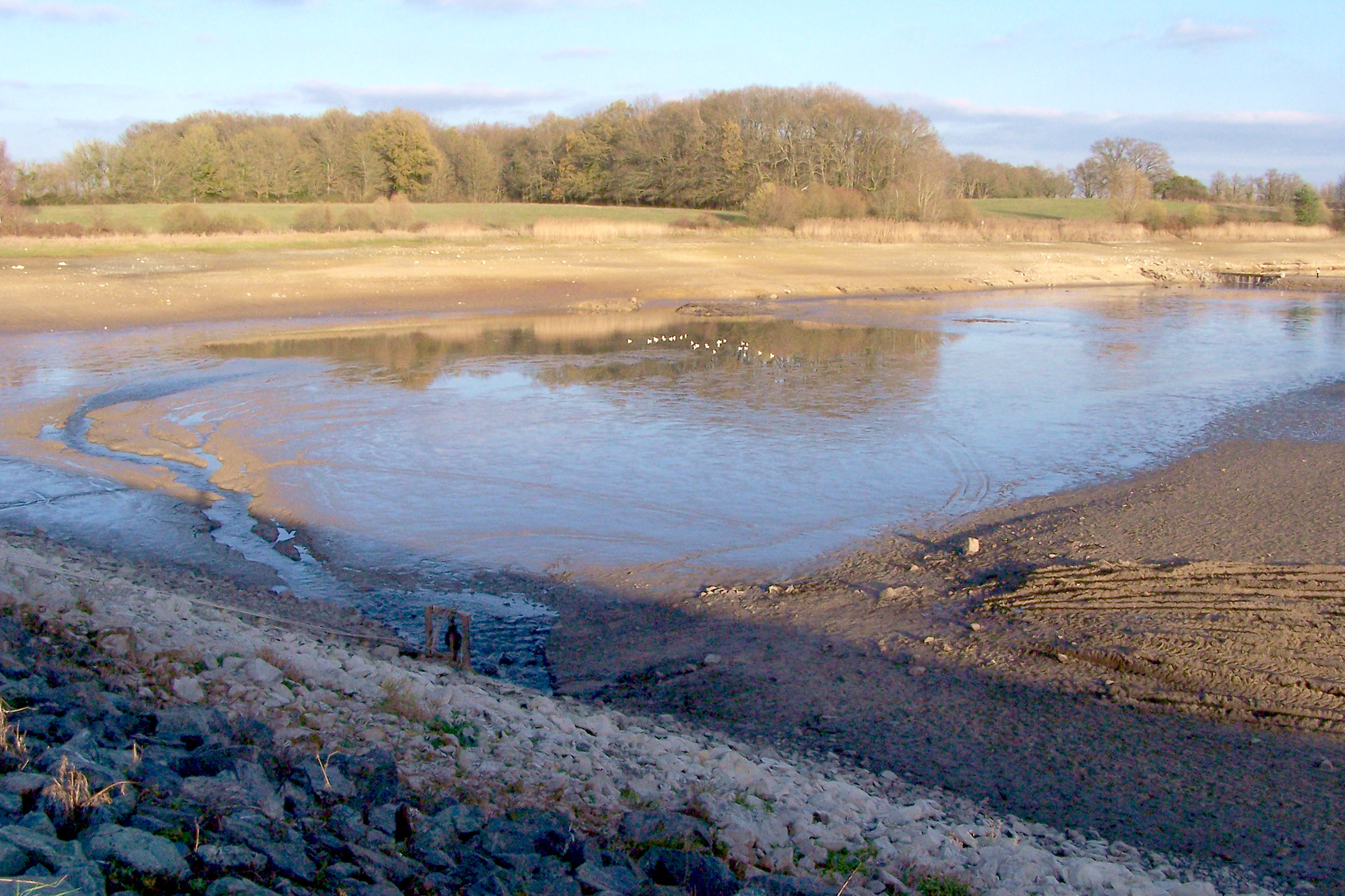
La Vidange du Lac 2007
Every artificial lake must be drained at regular intervals, normally as often as every ten years, to ensure that the dams are functioning safely and correctly and that there is no visible damage to the structure or hidden weaknesses.
This has been the case with the Lac de Rille and the Lac de Pincemaille since their inception and in 2007 there was the last radical lowering of the water levels at the end of the summer and levels as low as since the construction of the dam in 1977.
Of course, such interventions imply drastic impacts on both the abundant aquatic life with thousands of fish of many species plus a variety of amphibians and crustaceans; and also on the numerous migratory birds which visit annually, as well as on the resident herons and egrets which depend on it for their survival.
The 'vidange' must therefore be carried out with both speed and with great care to impact as little as possible on such species as well as ensuring that the dam structure can be inspected and where necessary repaired.
As of this year, 2025, the dam and lake have been in existence for around 50 years and with the last inspection nearly 20 years ago, a new 'vidange' is urgently necessary. It seems likely that that this will be carried out in 2026 if not before.
But here we present some photos and video showing those who carried out the vidange in 2007, and of the strenuous efforts made to protect both the fish and other life. It is an exercise which involved everybody, not just those managing the dam, but the fishermen and local people.
Above all the Lathan river had to be protected from the mud, sediments and polluting materials that could harm water quality downstream and in 2007 this was done largely successfully with a series of straw barriers. It is likely that similar or more extensive measures will be used in 2026.
VIDEO OF WORK AT THE LAST VIDANGE